
Top Destinations
Travelers' Choice

Beyond Expeditions. Beyond Business.
Beyond Imagination.
Top Destinations
Travelers' Choice
Beyond Expeditions. Beyond Business.
Beyond Imagination.
Beyond Expeditions. Beyond Business.
Beyond Imagination.
Beyond Expeditions. Beyond Business.
Beyond Imagination.
Sarpang is a southern Bhutanese district spanning approximately 1,946 km², with landscapes ranging from lowland plains to elevated forested areas. The district borders India and features fertile agricultural land, dense forests, and thriving river systems. Its main town, Gelephu, serves as a commercial hub and a key entry point into Bhutan, linking the country to India. The population is diverse, including Lhotshampa and other Bhutanese communities, which enrich the district with a mix of cultural and religious traditions.
Historically, Sarpang was administered under a regional governor system, later formalized as a dzongkhag (district) in 1973. Today, it is organized into several gewogs (village blocks), each contributing to local governance, agriculture, and cultural preservation. The district plays an important role in connecting Bhutan’s southern frontier with the rest of the country.

Gelephu, the main urban center of Sarpang, has historically been a key trade hub linking southern Bhutan to India. Its strategic location makes it both a commercial gateway and a vibrant cultural melting pot.
In recent years, the town has gained attention as the site for the ambitious Gelephu Mindfulness City (GMC). Announced by His Majesty the King, GMC is envisioned as a Special Administrative Region designed to integrate sustainable development, innovation, and Bhutanese values.
The city’s layout emphasizes eco-friendly living, cultural preservation, and well-being. Plans include green buildings, walkable streets, and biodiversity corridors. GMC aims to foster industries such as wellness, education, green technology, agri-tech, finance, and tourism. Programs like Pelsung engage Bhutanese youth, giving them a role in shaping the city’s future. GMC reflects Bhutan’s philosophy of Gross National Happiness, combining modernity with mindfulness and environmental care.

Part of Sarpang District, Royal Manas National Park (RMNP) is Bhutan’s oldest and most significant protected area, established to preserve the country’s unique biodiversity and natural heritage. It spans lowland plains to forested hills, encompassing a variety of ecosystems from tropical to temperate, which makes it a hotspot for wildlife and endemic plant species.
The park is home to elephants, tigers, gaurs, pygmy hogs, one-horned rhinoceroses, and more than 430 species of birds, including hornbills, making it invaluable for both wildlife conservation and ecological research.
Historically, RMNP was created to protect critical habitats along the Indian subcontinent corridor, ensuring safe migration routes for wildlife between Bhutan and India. Its role as a biological corridor is crucial for maintaining genetic diversity and sustaining populations of endangered species. The park is also culturally significant, as local communities have long depended on its forests and rivers for resources and have integrated its natural elements into their religious and spiritual practices.
Visitors are drawn to RMNP not only for its incredible wildlife but also for its rich cultural landscapes and eco-tourism opportunities. Trekking through the park, observing rare species, or engaging in guided nature tours offers travelers an immersive experience of Bhutan’s ecological and cultural heritage.

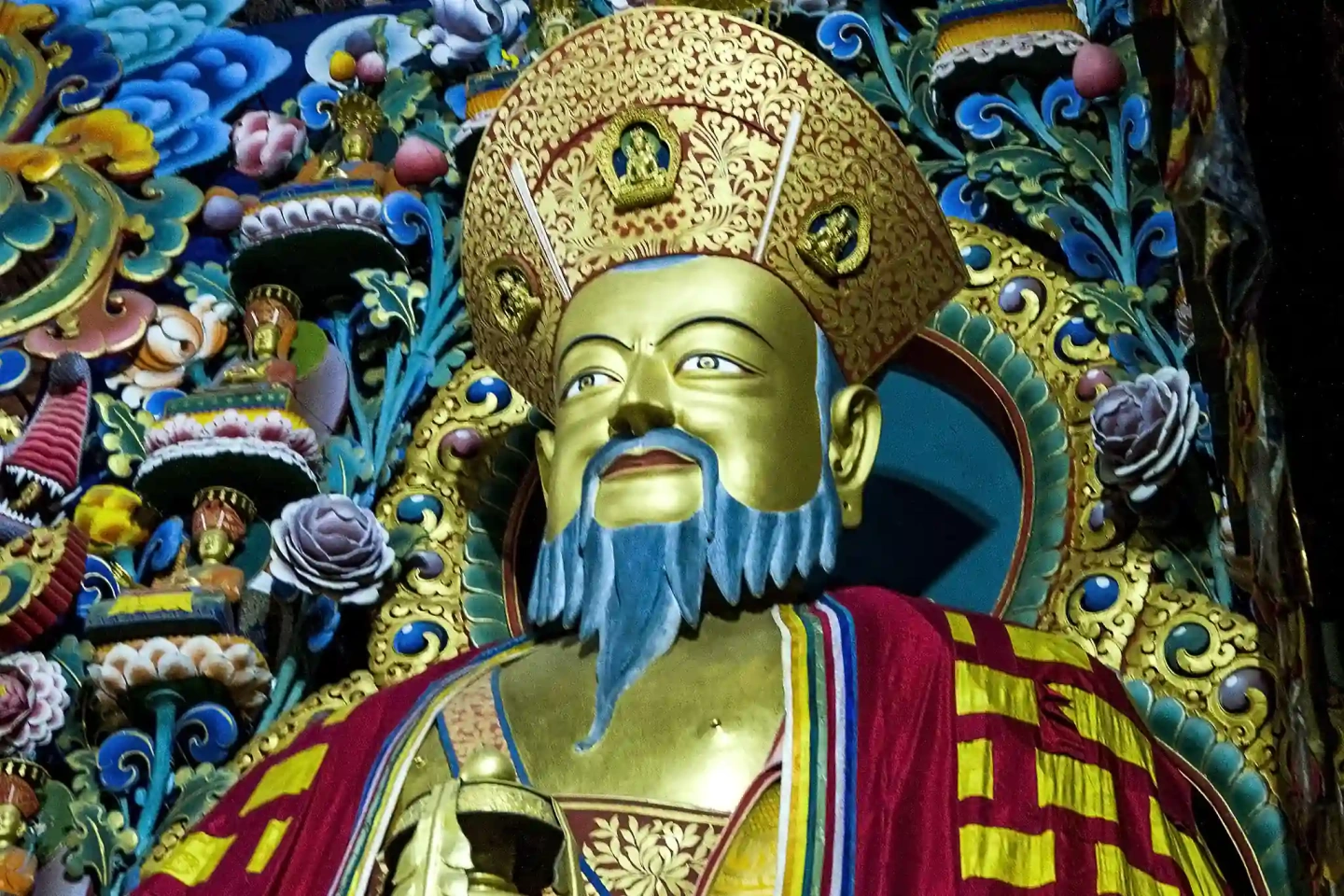
Sarpang is also home to the sacred Tharpaling Guru Lhakhang, dedicated to Guru Rinpoche (Padmasambhava), the 8th-century Buddhist master who introduced Vajrayana Buddhism to Bhutan.
This lhakhang holds historical and spiritual importance, as it has served for generations as a center of worship, meditation, and community gatherings.
The temple hosts festivals, ritual ceremonies, and retreats, attracting both local devotees and pilgrims from across Bhutan. It is believed that blessings from Guru Rinpoche at this site bring protection, guidance, and spiritual merit. Beyond its religious function, Tharpaling Guru Lhakhang plays a critical role in preserving Bhutanese Buddhist traditions, art, and monastic practices, making it a living repository of the district’s spiritual heritage.
For visitors, the lhakhang offers a window into Bhutanese faith, architecture, and ritual life, providing a deeply immersive cultural and spiritual experience that complements the natural and urban attractions of Sarpang.